Introduction
A cheque is commonly used for business transactions, personal payments and financial obligations. However, when a cheque is returned unpaid by a bank, it may create legal and financial complications for both the person issuing the cheque and the person receiving it.
In certain circumstances, cheque dishonour may attract legal action under Section 138 of the Negotiable Instruments Act, 1881.
Understanding the cheque bounce case procedure, statutory timelines and legal requirements is important before initiating or responding to proceedings.
If you are searching for a Cheque Bounce Lawyer in Dwarka or an NI Act 138 Lawyer in Dwarka, Chhabra Legal Advisers provides information and legal assistance concerning cheque dishonour matters.
What Is a Cheque Bounce Case Under Section 138 NI Act?
Section 138 of the Negotiable Instruments Act, 1881 deals with the dishonour of a cheque for reasons covered by the provision, including insufficiency of funds or an amount exceeding the arrangement with the bank.
For Section 138 to apply, the cheque must generally have been issued towards the discharge, wholly or partly, of a legally enforceable debt or other liability, and the statutory requirements must be satisfied.
Not every dishonoured cheque automatically results in an offence under Section 138. The facts, purpose of the cheque and compliance with statutory conditions are important.
What Is the Legal Notice Time Limit After Cheque Bounce?
The statutory timeline is important in a cheque dishonour matter.
Generally, the following steps apply:
1. Cheque Presentation
The cheque must be presented within its validity period, which is generally three months from its date under current banking practice.
2. Bank Return Information
The payee or holder in due course receives information from the bank that the cheque has been returned unpaid.
3. Sending the Legal Demand Notice
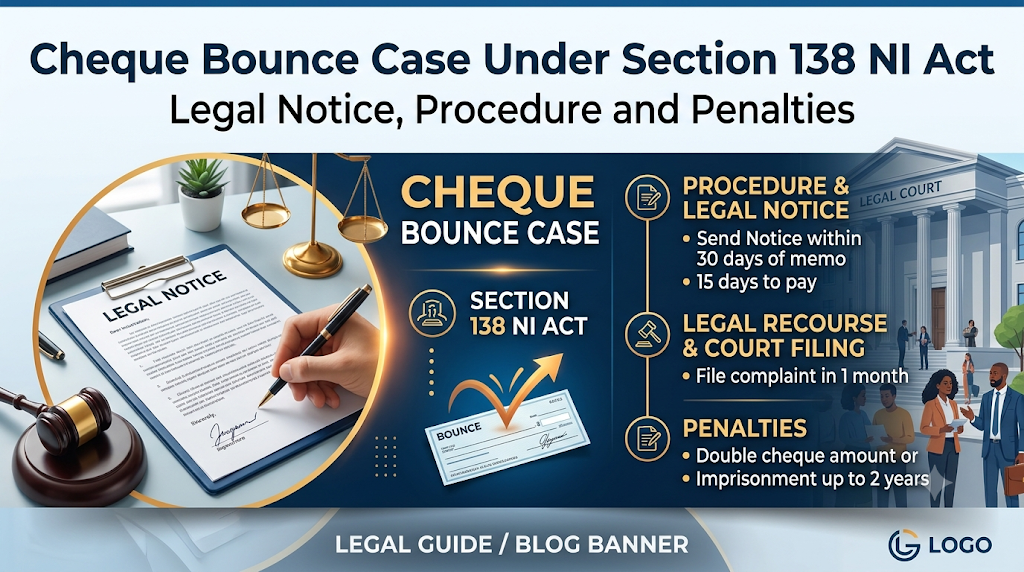
The payee must issue a written demand notice to the drawer within 30 days of receiving information from the bank about the dishonour.
4. Fifteen-Day Payment Period
The drawer gets 15 days from receipt of the notice to make payment of the cheque amount.
5. Filing the Complaint
If payment is not made within the statutory 15-day period, the cause of action arises. A complaint under Section 138 is generally required to be filed within one month from the date the cause of action arises, subject to the court's power to condone delay for sufficient cause.
What Is the Procedure for Filing a Cheque Bounce Case?
The general procedure may include:
-
Obtaining the bank return memo.
-
Reviewing the cheque and the underlying transaction.
-
Sending a statutory demand notice within the prescribed period.
-
Allowing the drawer the statutory payment period.
-
Preparing and filing a complaint before the competent court, if the legal requirements are satisfied.
-
Participating in the court proceedings and presenting relevant evidence.
The appropriate procedure depends on the facts and applicable statutory requirements.
What Documents Are Required for a Cheque Bounce Case?
Depending on the matter, relevant documents may include:
-
Original cheque or legally acceptable record of the cheque.
-
Bank return memo.
-
Copy of the legal demand notice.
-
Postal receipt and delivery proof.
-
Invoice, agreement or transaction documents.
-
Bank statements and payment records.
-
Relevant communications between the parties.
-
Other supporting evidence relating to the legally enforceable debt or liability.
What Is the Punishment Under Section 138 NI Act?
Section 138 provides for imprisonment for a term that may extend to two years, a fine that may extend to twice the amount of the cheque, or both, subject to the law and the court's decision.
The actual outcome depends on the facts, evidence and judicial assessment.
Can a Cheque Bounce Case Be Settled?
Cheque bounce cases may be compounded under Section 147 of the Negotiable Instruments Act, subject to the applicable legal process.
The parties may explore settlement depending on the circumstances. Any settlement should be properly documented and brought to the attention of the court where proceedings are pending, as required.
Why Consult a Cheque Bounce Lawyer in Dwarka?
Cheque dishonour matters involve strict statutory timelines, documentary requirements and court procedures. A lawyer can help review the transaction, examine the bank documents, prepare the legal notice, assess the available defence or claim and assist with court proceedings.
If you need a Cheque Bounce Case Lawyer in Dwarka, you can contact Chhabra Legal Advisers for information about its legal services.
Conclusion
A cheque dishonour matter requires careful attention to statutory requirements and timelines. Whether you have received a dishonoured cheque or have been served with a legal notice, understanding the applicable procedure is important.
For assistance with Section 138 NI Act proceedings, legal notices and cheque dishonour disputes, contact Chhabra Legal Advisers in Dwarka, New Delhi.
Disclaimer: This article is for general information only. Statutory timelines and legal consequences should be assessed against the documents and facts of each matter.